Q&A: Michael Sandel – Moral Limits of Markets
Written on August 20th, 2014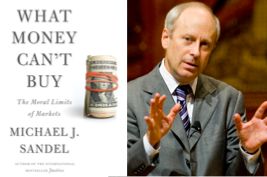 |
Aired 04/29/12
Should we pay children to get good grades? Is it ethical to pay people to test risky new drugs or donate their organs? What about hiring mercenaries to fight our wars, outsourcing inmates to for-profit prisons, auctioning admission to elite universities, or selling citizenship to immigrants able to pay?
Phenomenally popular Harvard professor, Michael Sandel, notes that in recent decades, market values have crowded out non-market norms in almost every aspect of life-medicine, education, government, law, art, sports, even family life and personal relations. He argues that we have drifted from having a market economy to being a market society.
In his new book, What Money Can’t Buy, Sandel asks: Is there something wrong with a world in which everything is for sale? If so, how can we prevent market values from reaching into spheres of life where they don’t belong? What are the moral limits of markets?
Q&A: DAN PALLOTTA, CHARITY CASE: How the Non-Profit Community Can Stand Up for Itself and Really Change the World
Written on August 15th, 2014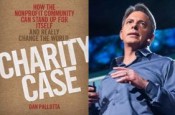 |
Aired: 04/15/13
When someone approaches you to donate to a non-profit, how many of you want to know how much of of its money goes to salaries and fund-raising and how much goes to actual program services? If you’re like most people, that question probably figures into your decision.
I myself have factored that question of how much is spent on overhead into my charitable giving. But is it a valid or wise way to make such decisions? According to today’s guest, DAN PALLOTTA, while it may be helpful, much more important is how well they serve their mission, how good a job they’re doing solving the problems you care about.
In his earlier book, UNCHARITABLE, Pallotta, who has a record of helping to raise hundreds of millions of dollars for causes, made the case that the way we think about non-profits and the rules we set for them, makes it harder for them to succeed on a truly significant scale. Too many nonprofits, he says, are rewarded for how little they spend — not for what they get done. Instead of equating frugality with morality, he asks us to start rewarding charities for big goals and big accomplishments (even if that comes with big expenses). Where other folks suggest ways to optimize performance inside the existing paradigm, UNCHARITABLE suggests that the paradigm itself is the problem and calls into question our fundamental beliefs about charity.
With a new book, CHARITY CASE: How the Non-Profit community Can Stand Up for Itself and Really Change the World and in a recent very popular TED talk, he says “My goal … is to fundamentally transform the way the public thinks about charity within 10 years.”
www.danpallotta.com
www.advertisingforhumanity.com
Q&A w/ JEREMY SCAHILL (#5 NYTimes Best-seller) DIRTY WARS: The World is a Battlefield
Written on July 30th, 2014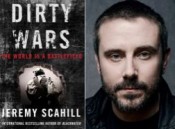 |
|
Aired: 05/05/13
In JEREMY SCAHILL’S new best-seller, DIRTY WARS, what begins as an investigation into a US night raid gone terribly wrong in a remote corner of Afghanistan quickly transforms into a high-stakes global investigation into the rise of Joint Special Operations Command, the most secret and elite fighting force in U.S. history. In military jargon, JSOC teams “find, fix and finish” their targets, who are selected through a secret process. No target is off limits for the “kill list,” including U.S. citizens.
It’s the unbounded, unending War on Terror: all bets are off, and almost anything goes. We have fundamentally changed the rules of the game and the rules of engagement. Today drone strikes, night raids, and U.S. government-condoned torture occur, generating unprecedented civilian casualties.
DIRTY WARS reveals covert operations unknown to the public and carried out across the globe by men who do not exist on paper and will never appear before Congress, raising questions about freedom and democracy, war and justice, morality and politics. No matter how little you know about these actions, they are being done in your name,
DIRTY WARS is also a documentary which opens in theaters June 7th.
Q&A: Marshall Ganz-Power of Story in Social Movements
Written on July 23rd, 2014 |
Aired 03/04/12
In the early 1960s, MARSHALL GANZ dropped out of Harvard to join the Civil Rights Movement in Mississippi. He then spent 16 years working with César Chávez and the United Farm Workers. He returned to Harvard in the 1990’s, graduated, earned his Ph.D., and now teaches organizing and the power of public narrative at the Kennedy School.
During Barack Obama’s 2008 presidential campaign, he was lead organizer of the grassroots for the former community organizer. GANZ offers a valuable perspective on the Occupy/99% movement.
Free Forum Q&A: SARA DAVIDSON, author of THE DECEMBER PROJECT: An Extraordinary Rabbi and a Skeptical Seeker Take Aim at Our Greatest Mystery
Written on July 18th, 2014 |
Aired: 03/16/14
We all deal day to day with a lot of questions and a lot of fears – around work, money, health, politcs, relationships. And at some point, we will all deal with the final fears and the final questions – fear of death and questions about what it means and what if anything comes after.
At his request, today’s guest, SARA DAVIDSON met every Friday for two years with 89-year-old RABBI ZALMAN SHACHTER-SHALOMI, the iconic founder of the Jewish Renewal movment, to discuss what he calls THE DECEMBER PROJECT. “When you can feel in your cells that you’re coming to the end of your tour of duty,” in tHe rabbi’s words, “what is the spiritual work of this time, how do we prepare for the mystery?”
Davidson, who describes herself as having a seeker’s heart and a skeptic’s mind, feared death would be a complete annihilation, while Reb Zalman felt certain that “something continues.” He didn’t want to convince her of anything, but to loosen her mind.” Through their talks, he wanted to help people “not freak out about dying,” and enable them to have a more heightened and grateful life.


