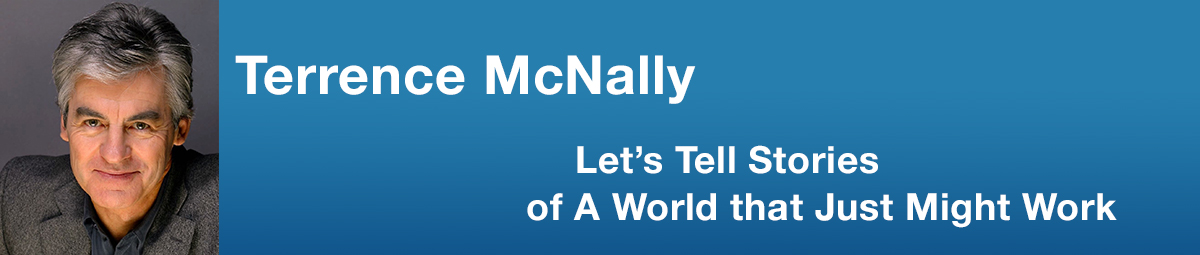
Q&A w/ DIRECTOR, ROBERT GREENWALD and TWO WHISTLEBLOWERS
Written on May 28th, 2013 |
Aired: 5/26/13
How difficult is it to be a government whistleblower these days? A dozen years after 9/11, with a former constitutional law professor in the White House, the sad news is that to expose government negligence or illegality is to jeopardize one’s career and life savings.
The newest documentary from producer and director ROBERT GREENWALD and Brave New Films, WAR ON WHISTLEBLOWERS: Free Press and the National Security State highlights the stories of four individuals who felt compelled to reveal acts of government illegality and violations to the U.S. constitution in the military industrial complex in the years following 9/11. In the film, whistleblowers, journalist and experts share what happens when the government punishes those who stand up to demand accountability and defend the constitution. Such actions and the atmosphere they engender has a chilling effect on the speech rights of citizens and the free press. This week I speak about all of this with GREENWALD as well as with two of the courageous whistleblowers featured in the film, THOMAS TAMM and FRANZ GAYL.
www.waronwhistleblowers.com
www.bravenewfilms.com
Q&A w/ DANNY KENNEDY, ROOFTOP REVOLUTION: How Solar Power Can Save Our Economy and the Planet from Dirty Energy
Written on May 13th, 2013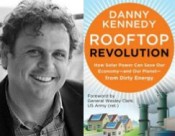 |
Aired: 05/12/13
Is there a revolution coming to your rooftop? While opponents claim solar is expensive, inefficient, and unreliable, in his book ROOFTOP REVOLUTION: How Solar Power Can Save Our Economy And Our Planet From Dirty Energy, DANNY KENNEDY makes clear solar can save money, create jobs, and protect the environment if only politics and perception will get out of the way.
During the recent Presidential campaign, we heard a lot about Solyndra, the solar start-up that received a sizable government loan only to go belly up. Solar’s detractors claim the collapse of Solyndra proves solar is just a hippie pipe dream, but Danny Kennedy, says the truth is quite the opposite. Solyndra failed because it wasn’t able to compete in a red-hot industry, not because solar isn’t ready for prime time.
The industry employs 100,000 people in the United States, twice as many as in 2009 and twice the number of coal miners. In 2011, Warren Buffett invested $2 billion in a solar farm, and General Electric bought a start-up solar manufacturer, announcing, “By 2020 this is going to be at least a $1 billion product line.” Production of solar-generated electricity rose by 45% in the first three quarters of 2010, while electricity from natural gas rose only 1.6% and coal declined by 4.2%. Kennedy argues for a rooftop revolution to break the entrenched power of the coal, oil, nuclear, and natural gas industries and their progress-denying allies.
www.rooftoprevolutionbook.com
www.sungevity.com
Q&A: Mark Mykleby, Natl Security=Sustainability
Written on April 8th, 2013 |
Aired: 04/07/13
In the preface to an article entitled A National Strategic Narrative, Anne-Marie Slaughter of Princeton says we need a narrative that confronts some of the following questions, “Where is the United States going in the world? How can we get there? What are the guiding stars that will illuminate the path along the way? We need a story with a beginning, middle, and projected happy ending that will transcend our political divisions, orient us as a nation, and give us both a common direction and the confidence and commitment to get to our destination.” She also writes, “In one sentence, the strategic narrative of the United States in the 21st century is that we want to become the strongest competitor and most influential player in a deeply inter-connected global system, which requires that we invest less in defense and more in sustainable prosperity and the tools of effective global engagement.”
Over time, the best way to shape the force of the future is to invest in the science, technology, education, and training that will equip our soldiers, sailors, airmen, and marines to adapt to an increasingly complex and dynamic environment. The hardware and software we buy and build are secondary to the gray matter we must cultivate now.
When I hear that someone high up in the military is talking seriously about sustainability, I take notice.
www.newamerica.net
Q&A: Social Entrepreneurs-Creating Good Work
Written on March 25th, 2013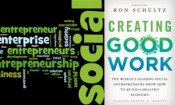 |
|
Aired: 03/24/13
This week I’m joined by RON SCHULTZ, editor of a new book, CREATING GOOD WORK, that brings together essays by social entrepreneurs that share their experiences as well as their insights and advice for others. Ron has invited a few of his book’s contributors (PAUL HERMAN, founder/CEO HIP Investor Inc; JIM FRUCHTERMAN, founder/CEO Benetech; CARRIE FREEMAN, Second Muse, formerly Intel) to join us, and I want to tap each person’s individual story while asking some of these bigger questions —
What is a social entrepreneur? What’s working in the field? Why is it working? What is the larger goal or vision? Why is social entrepreneurship important? What are the big challenges? What lessons have they learned? Where can listeners learn more?
I hope someone new to the concept will understand what we’re talking about and a knowledgeable listener will learn things they can put to use.
www.creatinggoodwork.com
www.benetech.org
www.secondmuse.com
www.hipinvestor.com
Q&A: MICHAEL LIND, Co-founder of the New America Foundation; Author of LAND OF PROMISE: An Economic History of the United States
Written on March 17th, 2013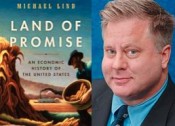 |
Aired: 03/17/13
This week’s guest, MICHAEL LIND, has written an economic history of the United States. In his new book, LAND OF PROMISE, he lays out a pattern in which the US has reinvented itself economically and politically a number of times based on the emergence of new technologies. From wind and water, to steam, to electricity and internal combustion, and finally the computer.
Each new dominant technology overwhelms the existing political and regulatory system and American government lags a generation or two behind technology-induced economic change. It takes a crisis or a war or both to overthrow the old regime and usher in the new.
When the U.S. economy has flourished, Lind argues, government, business, labor and universities have worked together as partners in a project of economic nation building. Today, as the United States struggles to emerge from the Great Recession, Land of Promise says that Americans, since the earliest days of the republic, have repeatedly reinvented the American economy-and have the power to do so again.


