Q&A: WILLIAM GREIDER, Correspondent & Author (Part 1 of 2)
Written on February 6th, 2009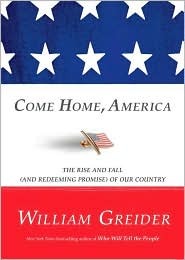 |
Aired 02/03/09 Part 1 of 2
I have been trying to book this week's guest every week since at least last September, and finally I got him. WILLIAM GREIDER has been right for so long about so many things that last fall I wanted his take on the emerging financial crisis and the prospects of Barack Obama's being elected. Once both of those things happened, I've wanted to talk with him about how we got here, what we need to do to deal with the crisis, and what a true progressive platform for turning things around would look like.
Now National Affairs Correspondent for the Nation, WILLIAM GREIDER has spent forty years examining how powerful institutions affect ordinary people. For 17 years he was the National Affairs Editor at Rolling Stone magazine, and is a former assistant managing editor at the Washington Post, where he worked for fifteen years as a national correspondent, editor and columnist. He is the author of national bestsellers ONE WORLD, READY OR NOT, SECRETS OF THE TEMPLE and WHO WILL TELL THE PEOPLE. Greider also served as a correspondent for six Frontline documentaries on PBS, including "Return to Beirut," which won an Emmy in 1985.
Q&A: NIALL FERGUSON, Columnist and Author
Written on January 29th, 2009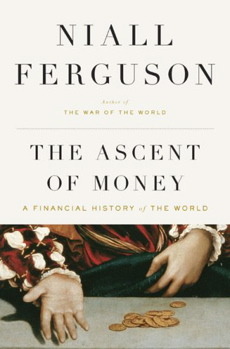 |
Aired 01/27/09
NIALL FERGUSON is Lawrence A. Tisch Professor of History at Harvard University, a Senior Research Fellow at Jesus College, Oxford, a Senior Fellow of the Hoover Institution at Stanford, an op ed columnist for the LA Times, and the other of several books, the newest is THE ASCENT OF MONEY: A Financial History of the World.
In THE ASCENT OF MONEY, NIALL FERGUSON says that finance is the foundation of human progress, and that financial history is the essential back-story behind all history.
He explains how banks provided the material basis for the the Italian Renaissance, while the bond market was the decisive factor in conflicts from the Seven Years' War to the American Civil War. Ferguson points out the origins of the French Revolution in a stock market bubble, and shows how a financial revolution is propelling the world's most populous country from poverty to power in a single generation.
The single most important lesson of financial history is that sooner or later every bubble bursts - sooner or later the bearish sellers outnumber the bullish buyers - sooner or later greed flips into fear.
We'll discuss how history can be helpful at a moment like this. And, what can it tell us about our current crisis and the way out?
Q&A: DAVID CAY JOHNSTON – Pulitzer Prize Journalist / Author
Written on January 22nd, 2009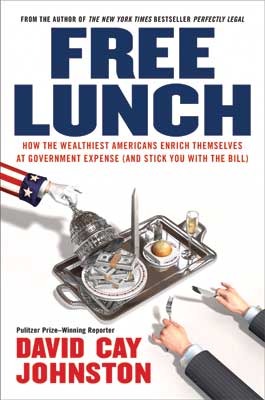 |
Aired 01/20/09
DAVID CAY JOHNSTON, who won a Pulitzer Prize for his innovative coverage of our tax system, retired this year as a investigative reporter for The New York Times. He is the author of PERFECTLY LEGAL: The Covert Campaign to Rig Our Tax System to Benefit the Super Rich--and Cheat Everybody Else and FREE LUNCH: How The Wealthiest Americans Enrich Themselves at Government Expenses (and Stick You with the Bill).
DAVID CAY JOHNSTON knows about money, finances, and the economy. More than anything else, he knows about taxes. We'll talk about how we can make the most of the opportunity presented by our current financial catastrophe. Do the bailouts make sense? What could we do that would be smarter, more efficient, more effective - that might work?
Q&A: CHRISTOPHER FLAVIN – President, WORLDWATCH INSTITUTE
Written on January 16th, 2009 |
Aired 01/13/09
CHRISTOPHER FLAVIN is President of the Worldwatch Institute, a Washington-based international research organization focused on energy, resource and environmental issues. Worldwatch is recognized around the world for its pathbreaking work on the global connections between economic, social, and environmental trends. Chris has spent his career at Worldwatch where he previously served as Senior Vice President and Vice President for Research.
Chris is co-author of three books on energy, including Power Surge: Guide to the Coming Energy Revolution, which anticipated many of the changes now under way in world energy markets.
Chris is a regular co-author of the Institute's annual State of the World report, which has been published in 36 languages. He has participated in several historic international conferences, including the Earth Summit in Rio de Janeiro in 1992 and the Climate Change Conference in Kyoto, Japan, in 1997.
Chris is a founding member of the Board of Directors of the Business Council for Sustainable Energy and serves as a board member of the Climate Institute and the Institute for Global Environmental Strategies in Japan. He is on the advisory boards of the American Council on Renewable Energy, and the Environmental and Energy Study Institute. He is also a member of the Greentech Innovation Network, an initiative of Kleiner Perkins Caufield & Byers.
TEN KEY CHALLENGES
(Excerpted from The Perfect Storm by CHRISTOPHER FLAVIN and Robert Engelman, Chapter One of STATE OF THE WORLD 2009, A Worldwatch Institute Report on Progress Toward a Sustainable Society.)
Ten challenges must be met in order to create the world of zero net greenhouse gas emissions that will be needed to achieve climate stability.
Thinking Long-term
Human beings have evolved to be very good at focusing on an immediate threat-whether it is wild animals the first humans faced on the plains of Africa or the financial panic that gripped the world in late 2008. Climate change is a uniquely long-range problem: its effects appear gradual on a human time scale, and the worst effects will likely be visited on people not yet alive. To solve this problem, we must embrace the future as our responsibility and consider the impact of today's decisions on future generations. Just as Egyptians built pyramids and Europeans built cathedrals to last millennia, we need to start acting as if the future of the planet matters beyond our own short lives.
Innovation
The world needs to develop and disseminate technologies that maximize the production and use of carbon-free energy while minimizing cost and optimizing convenience. (Convenience matters: the ease of transporting, storing, and using carbon-based fuels is among their attractions, not captured in price alone.) An effective climate pact will offer incentives that accelerate technological development and ensure that renewable energy and other low-emission technologies are deployed in all countries regardless of ability to pay the costs. We need to dramatically increase the efficiency with which we use carbon-based energy and lower release into the atmosphere of land-based CO2, methane, nitrogen oxides, and greenhouse gases stemming from cooling and various industrial processes. The opportunities for quick and inexpensive emissions reductions remain vast and mostly untapped.
Population
It is essential to reopen the global dialogue on human population and promote policies and programs that can help slow and eventually reverse its growth by making sure that all women are able to decide for themselves whether and when to have children. A comprehensive climate agreement would acknowledge both the impacts of climate change on vulnerable populations and the long-term contribution that slower growth and a smaller world population can play in reducing future emissions under an equitable climate framework. And it should renew the commitment that the world's nations made in 1994 to address population not by pressuring parents to have fewer or more children than they want but by meeting the family planning, health, and educational needs of women.
Changing Lifestyles
The world's climate cannot be saved by technology alone. The way we live will have to change as well-and the longer we wait the larger the needed sacrifices will be. In the United States, the inexorable increase in the size of homes and vehicles that has marked the past few decades has been a major driver of greenhouse gas emissions and the main reason that U.S. emission are double those of other industrial countries. Lifestyle changes will be needed, some of which seem unattractive today. But in the end, the things we may need to learn to live without - oversized cars and houses, status-based consumption, easy and cheap world travel, meat with every meal, disposable everything - are not necessities or in most cases what makes people happy. The oldest among us and many of our ancestors willingly accepted such sacrifices as necessary in times of war. This is no war, but it may be such a time.
Healing Land
We need to reverse the flow of carbon dioxide and other greenhouse gases from destroyed or degraded forests and land. Soil and vegetation can serve as powerful net removers of the atmosphere's carbon and greenhouse gases. Under the right management, soil alone could absorb each year an estimated 13 percent of all human-caused carbon dioxide emissions. To the extent we can make the land into a more effective "sink" for these gases we can emit modest levels essential for human development and wellbeing. Like efficiency, however, an active sink eventually faces diminishing returns. And any sink needs to be secured with "drain stoppers" to prevent easy return of greenhouse gases to the atmosphere when conditions change.
Strong Institutions
"Good governance" can be a cliché-until someone needs it to survive. The final months of 2008 laid painfully bare the dangerous imbalance between a freewheeling global economy and a regulatory system that is a patchwork of disparate national systems. And if there was ever a global phenomenon, the climate is it. In fact it is not hard to imagine the climate problem driving a political evolution toward global governance over the long term, but given the public resistance to that idea the next most effective climate-regulating mechanism will be the strength and effectiveness of the United Nations, multilateral banks, and major national governments. New institutions and new funds will be needed, but it could take a major public awakening or a dramatically deteriorating climate to overcome the obstacles to inventing and establishing them.
The Equity Imperative
A climate agreement that can endure and succeed will find mechanisms for sharing the burden of costs and potential discomforts. Per capita fossil fuel CO2 emissions in the United States are almost five times those in Mexico and more than 20 times the levels in most of sub-Sahara. An effective climate agreement will acknowledge the past co-optation of Earth's greenhouse-gas absorbing capacity by the wealthiest and most industrialized countries and the corresponding need to reserve most of what little absorbing capacity is left for countries in development. Most people live in such countries, and they bear little responsibility for causing this problem -though it is worth recalling that a small but growing share of their populations already have large carbon footprints.
Economic Stability
In the fall of 2008 the global economy foundered, raising the obvious question: can a world heading into hard economic times add to its burdens the costs of switching from fossil to renewable fuels or managing precious land for carbon sequestration? Any climate agreement built on an assumption of global prosperity is doomed to failure. And as growing and increasingly affluent populations demand more of the resources of a finite planet, we may have to balance the future of climate against present realities of hunger, poverty, and disease.
A robust international climate regime will need to design mechanisms that will operate consistently in anemic as well as booming economic times. And a strong pact will be built on principles and innovations that acknowledge and accommodate the problem of cost - while building in monitoring techniques to ensure that efficiency is not achieved at the expense of effective and enduring emission cuts and adaptation efforts.
Political Stability
A world distracted by major wars or outbreaks of terrorism will not be able to stay focused on the more distant future. And just such a focus is needed to prevent future changes in climate and adapt to the ones already occurring. A climate pact could encourage preemptive action to diminish insecurity caused or exacerbated by climate change. But unless nations can find ways to defuse violent conflict and minimize the chance that terrorism will distract and disrupt societies, climate change prevention and adaptation (along with development itself) will take a back seat.
On the bright side, negotiating an effective climate agreement offers countries an opportunity, if they will only seize it, to practice peace, to look beyond the narrowness of the interests within their borders at their dependence on the rest of the world, to see humanity as a single vulnerable species rather than a collection of nations locked in pointless and perpetual competition.
Mobilizing for Change
As fear of climate change has grown in recent years, so has political action. But opponents of action have repeatedly pointed to the vast costs of reducing emissions. At a time of serious economic problems, the power of that argument is growing, and some of those who are persuaded are going straight from denial to despair.
The most effective response to both of those reactions is, in the words of Common Cause founder John Gardner, to see global warming as "breathtaking opportunities disguised as insoluble problems." Solving the climate problem will create the largest wave of new industries and jobs the world has seen in decades. Michigan, Ohio, and Pennsylvania in the United States are among those that have devoted enormous efforts to attracting new energy industries - with a glancing reference to climate change and a major focus on creating new jobs to revive "rustbelt" economies.
In November 2009, the world faces a test. Will the roughly 200 national governments that meet in Copenhagen to forge a new climate agreement come up with a new protocol that provides both vision and a roadmap, accelerating action around the globe? The challenges are many: Will the global financial crisis and conflict in the Middle East distract world leaders? Will the new US president have time to bring his country back into a leadership position? Will the global North-South divide that has marked climate talks in recent years be overcome?
Climate change is not a discrete issue to be addressed apart from all the others. The global economy fundamentally drives climate change, and economic strategies will need to be revised if the climate is ever to be stabilized - and if we are to satisfy the human needs that the global economy is ultimately intended to meet.
We cannot afford to have the Copenhagen climate conference fail. The outcome of this meeting will be written in the world's history books - and in the lasting composition of our common atmosphere.
-----------------------------------------------------
WORLDWATCH INSTITUTE delivers the insights and ideas that empower decision makers to create an environmentally sustainable society that meets human needs. Worldwatch focuses on the 21st-century challenges of climate change, resource degradation, population growth, and poverty by developing and disseminating solid data and innovative strategies for achieving a sustainable society. For more information, visit www.worldwatch.org
Q&A: GERALD CELENTE – The Trends Research Institute
Written on January 12th, 2009 |
Aired 01/06/09
GERALD CELENTE of The Trends Research Institute publishes TRENDS JOURNAL. A New Yorker, who calls himself a political agnostic, Celente gives everybody hell. I first booked him in January 05 and listener response has led me to make this an annual show.
CELENTE accurately forecast the Iraqi War quagmire, the last two recessions, the Dot-Com meltdown, and the 1987 world stock market crash. As far back as 1993 he predicted that a new Crusades would be raging at the dawn of the new millennium.
Excerpt from TOP TRENDS OF 2009 by Trends Research
THE YEAR THAT WAS
We described last year's "Year that Was" as ending with "an economic bang and a political thud." By contrast, 2008 goes out with a spectacular display of political fireworks and an economic implosion unlike anything experienced before.
History was made. The racial barrier came down. A man of black & white blood, modest means and scant experience was elected to rescue a great and foundering nation. A young, charismatic president was replacing a Commander in Chief who had long since worn out his welcome.
In 2000, George W. Bush assumed the presidency following an election replete with doubt and irregularities. A troubled first year abruptly gave way to a 90 percent approval rating following the trauma of 9/11. Playing his Commander in Chief trump card, he declared a War on Terror and war on Iraq.
In 2004, with the Iraq War going badly but the economy booming - especially the real estate market - he remained popular enough to squeak out a second term. In 2006, with the costs of war and casualties mounting, a Democratic Congress was voted in with a mandate to end the Iraq War. Instead they kept funding it.
By 2007, with America still bogged down in war, the real estate bubble bursting, a credit crisis erupting, and the subprime lending market collapsing, George Bush's popularity went into free fall. No longer confined to disgruntled Democrats, Bush-bashing became a bipartisan pastime.
Most will remember the economy as the 2008 Election hot button issue. In reality, it replaced the Iraq War only when the news of failing banks, bustedbrokerages, government bailouts and rescue plans preoccupied the press.
But it was candidate Barack Obama's early stand against the Iraq War - and his promise to end it - that separated him from the favorites of both parties seeking the presidency. In early 2008, none of the candidates in the run for the White House had an approval rating above 50 percent. Going into the Iowa Primary, Hillary Clinton was leading in the national polls while Obama's campaign was slowly gaining momentum. It wasn't until talk show host Oprah Winfrey jumped into the ring that it kicked into high gear.
THE PRESIDENTIAL REALITY SHOW
With the undisputed Queen of TV in his corner, the Obama campaign suddenly transformed into a flawlessly packaged Oprah production. Whether a stadium spectacle or a small town meeting, every event was staged to perfection.Was the celebrity witchcraft that endears Oprah to her millions of fans directed toward political stagecraft?
As if by magic, Obama, an adequate public speaker, became the master of the Teleprompter; so skillful - and with cameras so artfully placed - that the illusion of spontaneity was created. Pacing the stage, confident of his words, his cadenced oratory gave him a messianic quality. "Yes we can!" preached Obama. "Yes we can!" echoed his mesmerized political congregation.
As the economy worsened and the Iraq War was pushed into the background, Obama's focused message of change and his tightly-scripted performance made him a leading contender in The Presidential Reality Show.
Meanwhile, his main challenger, Hillary Clinton was repeatedly discrediting herself by playing the race card, and clumsily exaggerating her foreign policy
achievements with such claims as having dodged bullets in Bosnia and negotiating the peace in Ireland.
In opposition, the Republicans ran the uncharismatic and aging John McCain, inextricably tied to eight years of the Bush administration, an insurmountable obstacle. The President, posting near record low approval ratings, was so universally derided and despised that McCain saw Bush as an unconditional liability, banning him from the campaign trail.
The combination of an economic meltdown, Mc- Cain's acknowledged lack of economic awareness ... and puzzling choice of running mate made possible the impossible: a black, practically unknown challenger swept into power.


