Q&A: DAVID BOLLIER, Author – VIRAL SPIRAL
Written on March 19th, 2009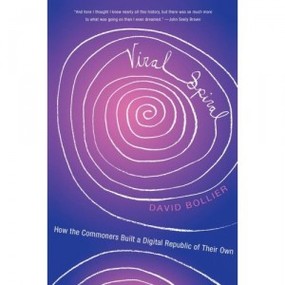 |
Aired 03/17/09
"A world organized around centralized control, strict intellectual property rights, and hierarchies of credentialed experts is under siege. A radically different order of society based on open access, decentralized creativity, collaborative intelligence, and cheap and easy sharing is ascendant." - from VIRAL SPIRAL
A global brigade of techies, lawyers, artists, musicians, scientists. businesspeople, innovators, and geeks of all stripes are dedicated to creating a digital republic committed to freedom and innovation.
From free and open-source software, Creative Commons licenses, Wikipedia, remix music and video mashups, peer production, open science, open education, and open business, the world of digital media has spawned a new "sharing economy" that increasingly competes with entrenched media giants.
I will also ask David to comment on the recent - and upcoming - bailouts, from the perspective of citizens and the commons. In other words, rather than fearing socialism, what are we getting for our "common" contributions to giant corporations -- and what should we be demanding?
DAVID BOLLIER is Senior Fellow at the Norman Lear Center at the USC Annenberg Center for Communication and co-founder of Public Knowledge, a Washington policy advocacy organization dedicated to protecting the information commons. His latest book is VIRAL SPIRAL: How the Commoners Built a Digital Republic of Their Own.
www.viralspiral.cc
www.bollier.org
www.onthecommons.org
Q&A: JOSH TICKELL, Author and Film Director
Written on March 12th, 2009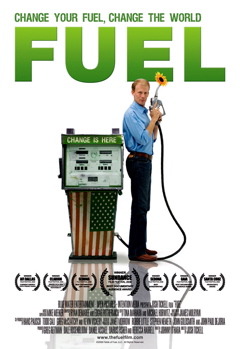 |
Aired 03/10/09
Growing up amongst the oil refineries in Louisiana, JOSH TICKELL experienced the impacts of dirty oil processing at a young age. After watching members of his family suffer from pollution-related cancers, Tickell began a lifelong quest to find sustainable, clean energy sources.
In 1997, TICKELL set out on the road with a biodiesel powered "Veggie Van" and a video camera and began filming what would eventually become known as FUEL, the 2008 Sundance Audience Award winning documentary film that investigates the possible replacement of fossil fuels with renewable energy.
Over the course of his 11 year journey, TICKELL traveled the world
going to over 25 countries, authored two books, founded a nonprofit organization, and jumpstarted America's biodiesel movement.
"Fuel" is a vital, superbly assembled documentary that presents an insightful overview of America's troubled
relationship with oil and how alternative and sustainable energies can reduce our country's -- and the world's -- addictive dependence on fossil fuels.
The film's structure is built around director-narrator Josh Tickell's personal journey of enlightenment, which started in childhood after moving with his family from idyllic Australia to murkier Louisiana, where he came to realize the oil-rich environment was being ravaged by the omnipotent petrochemical industry.
Later, as a young adult, he spent 11 years crossing the country in his vegetable oil-powered "Veggie Van," promoting biofuels and compiling footage for what would become this impressively comprehensive film.
The events of Sept. 11 and Hurricane Katrina factor in both visually and thematically, providing provocative anchors for the movie's indictment of what Tickell believes is the Big Oil-cozy, ecologically indifferent Bush administration. Johnny O'Hara's WGA Award-nominated script doesn't dwell on muckraking, however; it's more focused on broadly inspiring viewers than preaching to the converted.
Interviews with a wide range of environmentalists, policy makers and educators, along with such "green" celebrities as Woody Harrelson, Sheryl Crow and Larry Hagman offer serious fuel for thought -- as well as for action. Smartly animated interstitials, memorable archival material and a lively soundtrack round out the fast-paced proceedings.
Q&A: AZADEH MOAVENI, Author – HONEYMOON IN TEHRAN: TWO YEARS OF LOVE AND DANGER IN IRAN
Written on March 5th, 2009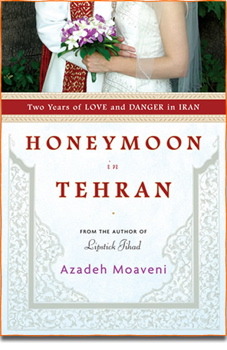 |
Aired 03/03/09
AZADEH MOAVENI is a contributing writer on Iran and the Middle East for TIME magazine. She spent two years in Iran, from 2005 to 2007, and just returned from three weeks there at the first of the year. As one of the few American correspondents allowed to work continuously in Iran since 1999, she has reported widely on youth culture, women's rights, and Islamic reform for Time, The New York Times Book Review, The Washington Post, and The Los Angeles Times. She is author of LIPSTICK JIHAD and co-author, with Nobel Peace Prize winner Shirin Ebadi, of IRAN AWAKENING. Her newest book is HONEYMOON IN TEHRAN: TWO YEARS OF LOVE AND DANGER IN IRAN
In his 2002 State of the Union address George W. Bush coined the term "axis of evil" to describe his vision of North Korea, Iraq, and Iran. The US has a new president who has made a fairly big and controversial deal about his willingness to meet with Iran's leaders without preconditions. Iran's last presidential election in 2005 brought the world Mahmoud Ahmadinejad. Another presidential election is coming soon to Iran.
AZADEH MOAVENI has spent a good deal of time in Iran since the year 2000 and written two books about Iranian society. I'll talk with her about life and politics behind the caricatures and rhetoric that so often clouds US perceptions of Iran.
Q&A: VICKI ROBIN, Author – YOUR MONEY OR YOUR LIFE
Written on February 13th, 2009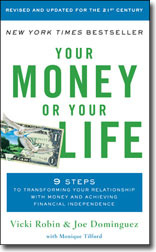 |
Aired 02/10/09
I bought this book when it originally came out in 1992. Much of it made profound sense then, at the dawn of the high-tech, Clinton era boom: Notice what really matters. Learn to say enough. Simplify. Choose.
Today as we descend into the deepest financial crisis in over 60 years, its message is no longer a lifestyle choice. For most of us - and ideally for the entire American culture - it is a necessity.
YOUR MONEY OR YOUR LIFE shows readers how to gain control of their money and finally begin to make a life, rather than just make a living.
The new edition contains updated resources and anecdotes and examples particularly relevant today. It tells you how to:
· get out of debt and develop savings
· reorder material priorities and live well for less
· resolve inner conflicts between values and lifestyle
· save the planet while saving money
...and more
Q&A: WILLIAM GREIDER, Correspondent & Author (Part 2 of 2)
Written on February 6th, 2009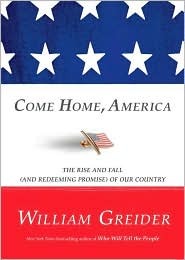 |
Aired 02/05/09 Part 2 of 2
Now National Affairs Correspondent for the Nation, WILLIAM GREIDER has spent forty years examining how powerful institutions affect ordinary people. For 17 years he was the National Affairs Editor at Rolling Stone magazine, and is a former assistant managing editor at the Washington Post, where he worked for fifteen years as a national correspondent, editor and columnist. He is the author of national bestsellers ONE WORLD, READY OR NOT, SECRETS OF THE TEMPLE and WHO WILL TELL THE PEOPLE. Greider also served as a correspondent for six Frontline documentaries on PBS, including "Return to Beirut," which won an Emmy in 1985.


