Written on January 28th, 2015
Aired 10/03/10
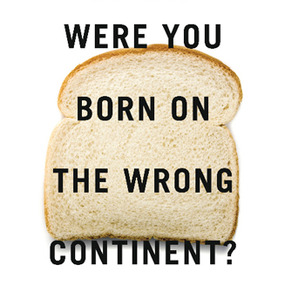
THOMAS GEOGHEGAN, a graduate of Harvard and Harvard Law School, is a labor lawyer with Despres, Schwartz and Geoghagen in Chicago. He has been a staff writer and contributing writer to The New Republic, and his work has appeared in many other journals. Geoghagen ran unsuccessfully in the Democratic primary to succeed Rahm Emanuel in Congress a candidate, and is the author of six books including WHOSE SIDE ARE YOU ON?, THE SECRET LIVES OF CITIZENS, and, most recently, WERE YOU BORN ON THE WRONG CONTINENT?
In his new book, WERE YOU BORN ON THE WRONG CONTINENT?, today's guest makes a strong case that European social democracies - particularly Germany - have some lessons and models that might make life a lot more livable. Not only that, they could help us keep our jobs.
In comparison to the U.S., the Germans have six weeks of federally mandated vacation, free university tuition, nursing care, and childcare. But you've heard the arguments for years about how those wussy Europeans can't compete in a global economy. You've heard that so many times, you might believe it. But like so many things, the media repeats endlessly, it's just not true.
According to Geoghagen, "Since 2003, it's not China but Germany, that colossus of European socialism, that has either led the world in export sales or at least been tied for first. Even as we in the United States fall more deeply into the clutches of our foreign creditors-China foremost among them-Germany has somehow managed to create a high-wage, unionized economy without shipping all its jobs abroad or creating a massive trade deficit, or any trade deficit at all. And even as the Germans outsell the United States, they manage to take six weeks of vacation every year. They're beating us with one hand tied behind their back."
http://tomgeoghegan.com/
Written on January 22nd, 2015
Aired 10/14/12
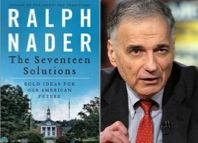
I’ll be talking with NADER about the critical ideas in his wonderful new book, THE 17 SOLUTIONS: Bold Ideas for Our American Future. Learn more about RALPH NADER and SEVENTEEN SOLUTIONS at http://nader.org/
Some of the 17 solutions:
* Reforming the tax system
* Making our communities more self-reliant
* Reclaiming science and technology for the people
* Getting corporations off welfare
* Creating national charters for large corporations
* Reducing our bloated military budget
* Organizing congressional watchdog groups
* Enlisting the enlightened super-rich
* Use government procurement to spur innovation
RALPH NADER was recently named by the Atlantic as one of the 100 most influential figures in American history, one of only four living people to be so honored. The son of immigrants from Lebanon, he has launched two major presidential campaigns and founded or organized more than one hundred civic organizations. His groups have made an impact on tax reform, atomic power regulation, the tobacco industry, clean air and water, food safety, access to health care, civil rights, congressional ethics, and much more. He is the author of eleven books, including UNSAFE AT ANY SPEED; THE GOOD FIGHT; THE SEVENTEEN TRADITIONS; and his latest, THE SEVENTEEN SOLUTIONS: BOLD IDEAS FOR OUR AMERICAN FUTURE.
Written on January 8th, 2015
Aired 03/14/10
Though Atul Gawande is a best-selling author, a Harvard professor, and an innovator in best practices for the W.H.O., he still performs 250-plus surgeries a year. A framed copy of Sylvia Plath's poem "The Surgeon at 2 a.m." stands on the desk in his office." Her surgeon's words: "I worm and hack in a purple wilderness." Gawande likes the Plath poem because it casts the surgeon in an ambiguous light.
"Most writing about people in medicine casts them as either heroes or villains," he says, "That poem captures the surgeon as a merely human, slightly bewildered and benighted person in a world that is ultimately beyond his control."
Medicine is just one area of our world that is becoming so complex that even the most expert professionals struggle to master the tasks they face. In his new book, The Checklist Manifesto, Gawande offers a disarmingly simple remedy: the checklist. Now being adopted in hospitals, the 90 second practice cuts fatalities In surgery by more than a third.
NOTE: This interview was recorded when Gawande was recently in LA, prior to Obama's healthcare summit and the latest legislative negotiations.
http://gawande.com/
Written on December 30th, 2014
 |
|
Recorded 06/05/09
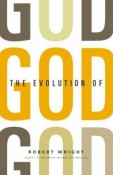
Christianity, Judaism and Islam are both peaceful and violent. Robert Wright discusses what circumstances bring out the best and worst in religion.
Is religion a force for good or ill?
This question has been more energetically debated over the last few years, globally, due to the West's confrontation with radical Islam, and in the U.S., to the political emergence and activism of evangelical Christians. This was brought to a head with the misadventures of George W. Bush, from Teri Schiavo to Bagdhad.
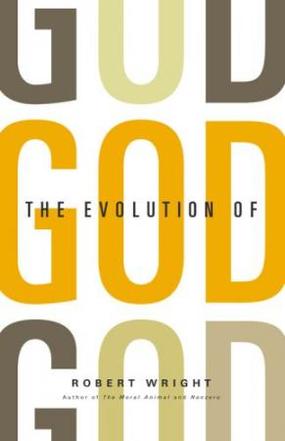
Robert Wright takes on big questions, and he's taken this one on in his new book, The Evolution of God. He follows the changing moods of God as reflected in ancient Scripture, to see what circumstances brought out the best and worst in religions.
According to Wright, "The moral of the story is simple: When people see their interests threatened by another group, this perception brings out the most belligerent parts of their religion. Such circumstances are good news for violent extremists and bad news for moderates. What Obama is trying to do -- make Palestinians feel less threatened, and make Muslims generally feel more respected -- may now, as it did in ancient times, bring out the tolerant side of a religion."
Wright is a visiting scholar at the University of Pennsylvania, a senior fellow at the New America Foundation, and founder and editor of
www.bloggingheads.tv His books include: Three Scientists and Their Gods: Looking for Meaning in an Age of Information; The Moral Animal: Evolutionary Psychology and Everyday Life; and Nonzero: The Logic of Human Destiny.
www.meaningoflife.tv and
www.bloggingheads.tv.
Written on December 25th, 2014
Aired: 12/23/12
Recorded: 10/17/12
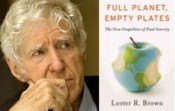
When gas prices were at or near record highs a few months ago in the US, that got people’s attention. What about food prices? Have you noticed them rising? Are you making different choices in the supermarket? If not, it might be because of two things.
One, in America so much of our food is processed, packaged and marketed, that raw commodity prices make up only a fraction of the price of the food we buy. In other countries, especially the less developed ones, an increase in the price of rice or corn can have a major effect on how much a family can afford to eat. Two, Americans spend only 9% percent of their income on food, while millions around the world spend 50-70%. Millions of households now routinely schedule foodless days each week-days when they will not eat at all. A recent survey by Save the Children shows that 14% of families in Peru now have foodless days. India, 24%. Nigeria, 27%.
In his newest book, FULL PLANET, EMPTY PLATES, LESTER BROWN writes,
“The U.S. Great Drought of 2012 has raised corn prices to the highest level in history. The world price of food, which has already doubled over the last decade, is slated to climb higher, ushering in a new wave of food unrest. This year’s corn crop shortfall will accelerate the transition from the era of abundance and surpluses to an era of chronic scarcity. As food prices climb, the worldwide competition for control of land and water is intensifying. In this new world, access to food is replacing access to oil as an overriding concern of governments. Food is the new oil, land is the new gold. Welcome to the new geopolitics of food.”
www.earth-policy.org