Written on December 11th, 2014
Aired 08/15/10
Prohibition has failed -- again. Instead of treating the demand for illegal drugs as a market, and addicts as patients, policymakers the world over have boosted the profits of drug lords and fostered narcostates that would frighten Al Capone.
Today, there are more drugs on our streets at cheaper prices than ever before. There are more than 1.2 million people behind bars in the U.S., a large percentage of them for nonviolent drug usage. Under our failed drug policy, it is easier for young people to obtain illegal drugs than a six-pack of beer. Why? Because the sellers of illegal drugs don't ask kids for IDs. As soon as we outlaw a substance, we abandon our ability to regulate and control the marketing of that substance.
There is smarter approach usually called harm reduction. Reducing drug use is not nearly as important as reducing the death, disease, crime, and suffering associated with both drug misuse and failed policies of prohibition.
But there are signs of change in the wind. The US Congress recently reversed years of inaction to make sentencing for crack and powder cocaine more equal and proposition 19 on the ballot in CA in November would legalize marijuana.
I caught up with Ethan Nadelmann founder and executive director of the DRUG POLICY ALLIANCE in early July at a daylong conference in Los Angeles - New Directions California: A Public Health and Safety Approach to Drug Policy and he agreed to join me on the radio.
http://www.drugpolicy.org/homepage.cfm
For info re CA Prop 19: Regulate, Control and Tax Cannabis Act of 2010
http://taxcannabis.org/
Written on December 4th, 2014
Aired 9/30/12
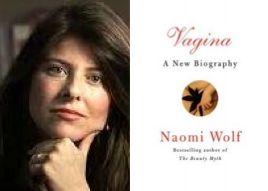
When Naomi Wolf’s The Beauty Myth was published in 1991, Gloria Steinem hailed it as “a smart, angry, insightful book, and a clarion call to freedom,” recommending “Every woman should read it.” The New York Times called it one of the most important books of the 20th century. Over the intervening two decades, Wolf continued to write about the role of women in our culture, but she also took on broader political issues in books such as The End of America and Give Me Liberty: A Handbook for American Revolutionaries.
In her newest book, VAGINA: A NEW BIOGRAPHY, she returns to the feminine and the personal. Drawing on cutting-edge neurobiological research, she makes the bold claim that there is a direct link between a woman’s experience of her vagina and her experience of her very sense of self. Heralded by Publishers Weekly as one of the best science books of the year, the book is also receiving more than its share of critical reviews. I’ll talk with Wolf — No stranger to controversy — about the good, the bad, and the surprising – in her research, her synthesis, and in responses to her new work.
http://naomiwolf.org
Written on November 27th, 2014
Aired 08/01/10
RAJ PATEL has worked for the World Bank and WTO and been tear-gassed on four continents protesting against them. Writer, activist, and academic, he is currently a visiting scholar at UC Berkeley's Center for African Studies, a researcher at the School of Development Studies at the University of KwaZulu-Natal, and a fellow at The Institute for Food and Development Policy, also known as Food First. He is the author of STUFFED AND STARVED and his latest THE VALUE OF NOTHING: HOW TO RESHAPE MARKET SOCIETY AND REDEFINE DEMOCRACY.
http://rajpatel.org/
Written on November 18th, 2014
Aired 11/14/10
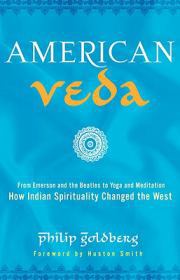
Spiritual, but Not Religious PHIL GOLDBERG author, AMERICAN VEDA: From Emerson and the Beatles to Yoga and Meditation -- How Indian Spirituality Changed the West
GREG EPSTEIN Humanist Chaplain, Harvard University and author, GOOD WITHOUT GOD: What a Billion Nonreligious Do Believe
Learn more at philipgoldberg.com and AmericanVeda.com
Learn more at harvardhumanist.org
Written on November 12th, 2014
Aired 04/11/10
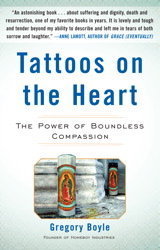
Father Boyle has made a point of collecting and telling uniquely powerful stories of life and death, and his work has supplied him with more than anyone should know.He has so far buried 168 of his homies, and fills his first book TATTOOS ON THE HEART with their stories. I read it cover to cover on a plane flight Chicago to LA, and cried at least a dozen times. Boyle's compassion is boundless, his work is courageous, and his example is a profound challenge.
Father GREGORY BOYLE was ordained a Jesuit priest in 1982. He received his Master of Divinity from the Weston School of Theology; and a Sacred Theology Masters degree from the Jesuit School of Theology. Since 1986, Father Gregory has been the pastor of Dolores Mission in the Boyle Heights neighborhood of Los Angeles. The church sits between two large public housing projects, Pico Gardens and Aliso Village, known for decades as the gang capital of the world. In 1988, Father Boyle began what would become Homeboy Industries, now located in downtown Los Angeles. His first book is TATTOOS ON THE HEART.
http://www.homeboy-industries.org/