Written on February 15th, 2015
Originally Aired 01/17/10
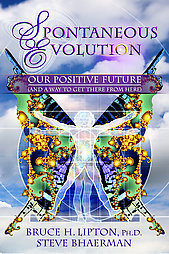
BRUCE LIPTON, Ph.D., a leading voice in new biology, bridges science and spirit. A cell biologist by training, he taught at the University of Wisconsin's School of Medicine, and later performed pioneering studies at Stanford University. He's the author of The Biology of Belief, and his latest with Steve Bhaerman, SPONTANEOUS EVOLUTION
STEVE BHAERMAN is an author, humorist, and political and cultural commentator who's been writing and performing enlightening comedy as Swami Beyondananda for over 20 years. He's the author of several books prior to his current collaboration with Lipton on SPONTANEOUS EVOLUTION.
http://www.brucelipton.com/
http://www.wakeuplaughing.com/
Written on February 13th, 2015
Aired 12/12/09
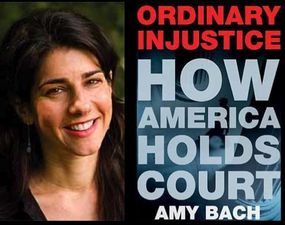
Attorney AMY BACH spent eight years investigating the chronic lapses in courts across America. Lawyers sleep through trials. False confessions and mistaken eye-witness identifications convict the innocent. The rich walk, the poor go to prison.
ORDINARY INJUSTICE goes beyond one particular injustice, one specific court, or one aspect of the legal system. Bach rejects the easy explanations of bad apples and meager funding to show how in the name of expedience legal professionals routinely choose to collaborate rather than face off as adversaries. Her investigation -- from small-town Georgia to upstate New York, from Chicago to Mississippi --reveals a culture of complicity among prosecutors, defenders, and judges that rewards shoddiness and sacrifices defendants and victims to keep the court calendar moving.
http://www.slate.com/id/2234594/
http://www.scotuswiki.com/index.php?title=Sullivan_v._Florida
Written on February 5th, 2015
Aired: 06/09/13
NYTimes review: “This book hums – with sorrow, outrage and compassion.”- #8 Best-seller
GEORGE PACKER has written a remarkable book, THE UNWINDING: An Inner History of the New America. In it, he argues that seismic economic shifts during a single generation have created a country of winners and losers, leaving the social contract in pieces and setting citizens adrift to find new paths forward. Packer sees America as a superpower in danger of coming apart at the seams, its elites no longer elite, its institutions no longer relevant. We’ve covered a lot of this ground before on Free Forum, but the power of THE UNWINDING is in how Packer tells his truth.
He begins – “No one can say when the unwinding began – when the coil that held Americans together in its secure and sometimes stifling grip first gave way. Like any great change, the unwinding began at countless times, in countless ways – and at some moment the country, always the same country, crossed a line of history and became irretrievably different. If you were born around 1960 or afterward, you have spent your adult life in the vertigo of that unwinding.”He follows the prologue with a series of newsreel headlines in the fateful year of 1978 and goes on to combine the intimate stories of several Americans–Dean Price, the son of tobacco farmers in the rural South who becomes an evangelist for a new economy in the rural South; Tammy Thomas, a factory worker in Youngstown trying to survive the collapse of her city; Jeff Connaughton, a Washington insider bouncing between political idealism and the lure of organized money; and Peter Thiel, a Silicon Valley billionaire with a radical vision of the future–with biographical sketches of this era’s leading public figures, from Newt Gingrich to Jay-Z, and collages made from newspaper headlines, advertising slogans, and song lyrics, Packer captures the flow of events and undercurrents that have set America in decline.
Publisher’s site for The Unwinding
Written on January 28th, 2015
Aired 10/03/10
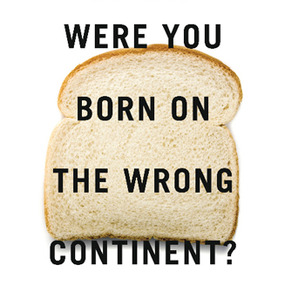
THOMAS GEOGHEGAN, a graduate of Harvard and Harvard Law School, is a labor lawyer with Despres, Schwartz and Geoghagen in Chicago. He has been a staff writer and contributing writer to The New Republic, and his work has appeared in many other journals. Geoghagen ran unsuccessfully in the Democratic primary to succeed Rahm Emanuel in Congress a candidate, and is the author of six books including WHOSE SIDE ARE YOU ON?, THE SECRET LIVES OF CITIZENS, and, most recently, WERE YOU BORN ON THE WRONG CONTINENT?
In his new book, WERE YOU BORN ON THE WRONG CONTINENT?, today's guest makes a strong case that European social democracies - particularly Germany - have some lessons and models that might make life a lot more livable. Not only that, they could help us keep our jobs.
In comparison to the U.S., the Germans have six weeks of federally mandated vacation, free university tuition, nursing care, and childcare. But you've heard the arguments for years about how those wussy Europeans can't compete in a global economy. You've heard that so many times, you might believe it. But like so many things, the media repeats endlessly, it's just not true.
According to Geoghagen, "Since 2003, it's not China but Germany, that colossus of European socialism, that has either led the world in export sales or at least been tied for first. Even as we in the United States fall more deeply into the clutches of our foreign creditors-China foremost among them-Germany has somehow managed to create a high-wage, unionized economy without shipping all its jobs abroad or creating a massive trade deficit, or any trade deficit at all. And even as the Germans outsell the United States, they manage to take six weeks of vacation every year. They're beating us with one hand tied behind their back."
http://tomgeoghegan.com/
Written on January 22nd, 2015
Aired 10/14/12
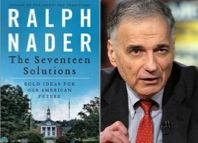
I’ll be talking with NADER about the critical ideas in his wonderful new book, THE 17 SOLUTIONS: Bold Ideas for Our American Future. Learn more about RALPH NADER and SEVENTEEN SOLUTIONS at http://nader.org/
Some of the 17 solutions:
* Reforming the tax system
* Making our communities more self-reliant
* Reclaiming science and technology for the people
* Getting corporations off welfare
* Creating national charters for large corporations
* Reducing our bloated military budget
* Organizing congressional watchdog groups
* Enlisting the enlightened super-rich
* Use government procurement to spur innovation
RALPH NADER was recently named by the Atlantic as one of the 100 most influential figures in American history, one of only four living people to be so honored. The son of immigrants from Lebanon, he has launched two major presidential campaigns and founded or organized more than one hundred civic organizations. His groups have made an impact on tax reform, atomic power regulation, the tobacco industry, clean air and water, food safety, access to health care, civil rights, congressional ethics, and much more. He is the author of eleven books, including UNSAFE AT ANY SPEED; THE GOOD FIGHT; THE SEVENTEEN TRADITIONS; and his latest, THE SEVENTEEN SOLUTIONS: BOLD IDEAS FOR OUR AMERICAN FUTURE.