Written on March 12th, 2015
Aired 11/25/08
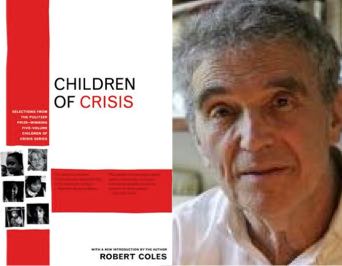
Who and what is Robert Coles? Social scientitst, humanist, political activist, psychiatrist, minstrel, wandering storyteller, mystic, wise man, poet, dissenter, and yes, I'll use the word, secular saint.
-Andrew Greenley, Chicago Tribune
I have long wanted to interview Robert Coles, and now, for an hour this week, I will finally do it. I invite anyone to google his books. He has written on a broad range of topics, but consistently on subjects that matter
Much of his work is about story, much about children, some is about poverty, about art, about spirit, about meaning.
I will talk with him about the power of story, the story of thanksgiving, the story of the current moment -- multiple crises and the emergence of Obama, and "Great Writing about Business" that has something to say to the current moment, when it appears business and finance have lost their way.
Written on March 5th, 2015
Aired 09/08/09
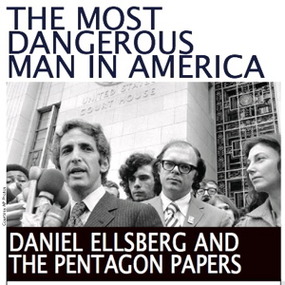
Daniel Ellsberg is an American hero. September 23rd is the 40th anniversary of the first night of copying the Pentagon Papers, which he took from his safe at the Rand Corporation in Santa Monica.
America was embroiled in a dirty war based on lies. A president was abusing the power of his office, ignoring the will of the people, Congress and the courts. He promised peace while planning war without end. Daniel Ellsberg, a military analyst, leaded the truth about the Vietnam war to the New York Times. He risked life in prison to end a war he helped plan. Henry Kissinger called Daniel Ellsberg, "the most dangerous man in America."
He's still at it. This week Ellsberg begins the online publication of The American Doomsday Machine, his memoir of the nuclear era.
INFO
http://www.ellsberg.net/
Written on February 27th, 2015
Aired 09/09/12
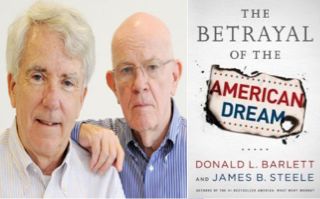
Let’s suppose, for a moment, there was a country where the people in charge charted a course that eliminated millions of good-paying jobs. Suppose they gave away several million more jobs to other nations. Finally, imagine that the people running this country implemented economic policies that enabled those at the very top to grow ever richer while most others grew poorer. You wouldn’t want to live in such a place, would you? Too bad. You already do.
Those are the words of this week’s guests, DON BARLETT and JIM STEELE.
These are some of the consequences of failed U.S. government policies that have been building over the last three decades – the same policies that people in Washington today are intent on keeping or expanding…Most significant of all, the American dream of the last half-century has been revoked for millions of people – a dream rooted in a secure job, a home in the suburbs, the option for families to live on one income rather than two, a better life than your parents had and a still better life for your children.
Barlett and Steele wrote these words in 1992. They are the first words of their Pulitzer Prize winning series of articles in the Philadelphia Inquirer, which led to the #1 best-selling book, America: What Went Wrong. They put their finger on things and connected dots that really established a lens through which to view the next 20 years. The point of view of the 99% movement is basically the one Barlett and Steele described and predicted at the birth of the Clinton era.
http://americawhatwentwrong.org
http://barlettandsteele.com
Written on February 15th, 2015
Originally Aired 01/17/10
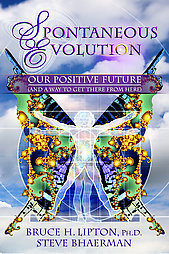
BRUCE LIPTON, Ph.D., a leading voice in new biology, bridges science and spirit. A cell biologist by training, he taught at the University of Wisconsin's School of Medicine, and later performed pioneering studies at Stanford University. He's the author of The Biology of Belief, and his latest with Steve Bhaerman, SPONTANEOUS EVOLUTION
STEVE BHAERMAN is an author, humorist, and political and cultural commentator who's been writing and performing enlightening comedy as Swami Beyondananda for over 20 years. He's the author of several books prior to his current collaboration with Lipton on SPONTANEOUS EVOLUTION.
http://www.brucelipton.com/
http://www.wakeuplaughing.com/
Written on February 13th, 2015
Aired 12/12/09
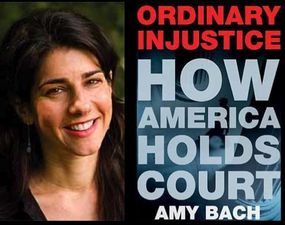
Attorney AMY BACH spent eight years investigating the chronic lapses in courts across America. Lawyers sleep through trials. False confessions and mistaken eye-witness identifications convict the innocent. The rich walk, the poor go to prison.
ORDINARY INJUSTICE goes beyond one particular injustice, one specific court, or one aspect of the legal system. Bach rejects the easy explanations of bad apples and meager funding to show how in the name of expedience legal professionals routinely choose to collaborate rather than face off as adversaries. Her investigation -- from small-town Georgia to upstate New York, from Chicago to Mississippi --reveals a culture of complicity among prosecutors, defenders, and judges that rewards shoddiness and sacrifices defendants and victims to keep the court calendar moving.
http://www.slate.com/id/2234594/
http://www.scotuswiki.com/index.php?title=Sullivan_v._Florida