Q&A: Drew Westen, Professor and Author
Written on December 3rd, 2008
Aired 12/01/08 Drew Westen, 11/17/08 - How Obama Won "in the closing eight weeks of the campaign, Obama controlled the four stories that matter most in an election: the story you tell about your yourself (that he was the candidate of change), the story you tell about your opponent (that he was four more years of Bush), the story the other candidate is telling about himself (McCain the maverick, which Obama countered by citing McCain's proclamation that he had voted with Bush over 90% of the time and parrying, "That's not a maverick, that's a sidekick"), and the stories McCain was telling about Obama (that he lacked the experience and judgment to lead, which events transpired to allow Obama to counter with the entire nation watching)."
SPECIAL: Your Calls – POST-ELECTION
Written on November 12th, 2008
Aired 11/11/08 Last week during my two hour election day special, I said the following: When the nation is in the mood for change, it responds to charismatic optimists. FDR, JFK, Reagan, Clinton. The first time I saw Barack Obama on television at the 2004 convention, I felt not just that I had seen an excellent politician, but that I might have experienced an enlightened being. That it turns out he's an excellent politician as well as a superb manager gives me great hope. Our multiple severe crises may have finally broken through our culture of distraction enough that we are ready to ask questions, question answers and consider fundamental change. Barack Obama may be the ideal President for this moment. I won't interview a guest in depth on this show, though I've invited a number of notables to join me for a few minutes. I'll share my thoughts and feelings and maybe some news and opinion. And I invite you to join me to do the same. When I got a count-down keychain for Christmas last year, there were 390 days left till Bush's Last Day. Now that key chain says 70 and the mood in the country says he's already gone. We've got 60 minutes to celebrate. I'd like callers to answer three questions: What's your reaction to the election? What next steps would you like to see from Obama? What next steps do you think people ought to take? Join me in moving from "why we can't" to "how we will."
Q&A: VAN JONES, Author
Written on November 1st, 2008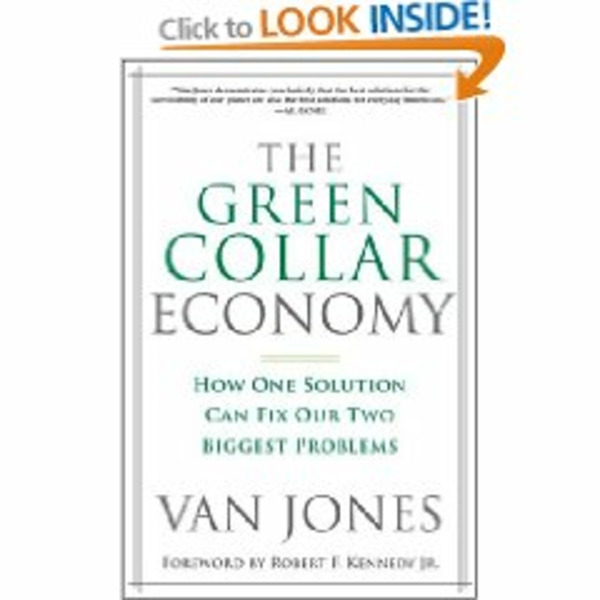
Aired 10/28/08 The economy is in crisis. Unemployment is rising. Families are hurting. Despite recent drops in oil prices, the days of cheap gas and oil are gone forever. Climate change calls for massive changes in the way we supply and use energy. Today’s guest sees that these crises are connected and believes that together they present an enormous opportunity. VAN JONES, a young, dynamic, charismatic, optimistic, solutions-oriented African American with an Ivy League law degree – boy that sounds familiar -- is the founder and president of GREEN FOR ALL and author of THE GREEN COLLAR ECONOMY A new report just released by the U.S. Conference of Mayors says that we can create over 4 million green jobs if we aggressively shift away from traditional fossil fuels toward alternative energy and a significant improvement in energy efficiency. Another report just released by the Political Economy Research Institute and the Center for American Progress shows that the U.S. can create two million jobs over two years by investing $100 billion in a green economic recovery plan. The report also shows that this investment would create four times more jobs than spending the same amount of money within the oil industry. Green For All and its partners are proposing a Clean Energy Corps that includes a revolving loan fund to finance the ambitious retrofitting of the nation's building stock. An investment of less than $3 billion per year would provide financing and can be expected to create close to 120,000 green jobs a year and 600,000 over five years, while also lowering home heating and electricity bills for homeowners and small businesses. VAN JONES is the founder and president of GREEN FOR ALL, a national advocacy organization based in Oakland, California, committed to building an inclusive, green economy - strong enough to lift millions of people out of poverty. Van also co-founded the Ella Baker Center for Human Rights and Color of Change, both committed to equal justice and opportunity for low-income people and people of color. Van has earned many honors, including the 1998 Reebok International Human Rights Award; the International Ashoka Fellowship; selection as a World Economic Forum “Young Global Leader;” the Rockefeller Foundation “Next Generation Leadership” Fellowship; and Campaign for America’s Future “Paul Wellstone Award 2008.” Van is a Senior Fellow with Center for American Progress. His first book, THE GREEN COLLAR ECONOMY is a New York Times best-seller.
Q&A: HARVEY WASSERMAN, Author
Written on October 10th, 2008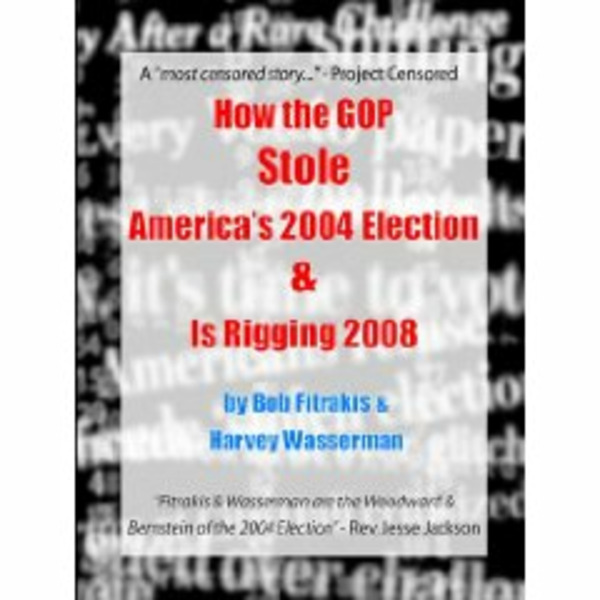
Aired 10/07/08 HARVEY WASSERMAN is one of the nation's experts on the GOP's efforts to shrink and steal the vote in 2000, 2002, and 2004. He'll give us an update on where we stand a month from the election, and what we can do to stop they from doing it again. HARVEY WASSERMAN is senior advisor to Greenpeace USA and the Nuclear Information & Resource Service, senior editor of www.freepress.org and author of several books, including SOLARTOPIA and co-authro with Bob Fitrakis of HOW THE GOP STOLE AMERICA'S 2004 ELECTION & IS RIGGING 2008 and AS GOES OHIO: ELECTION THEFT SINCE 2004.
Q&A: DEAN BAKER, Author
Written on October 9th, 2008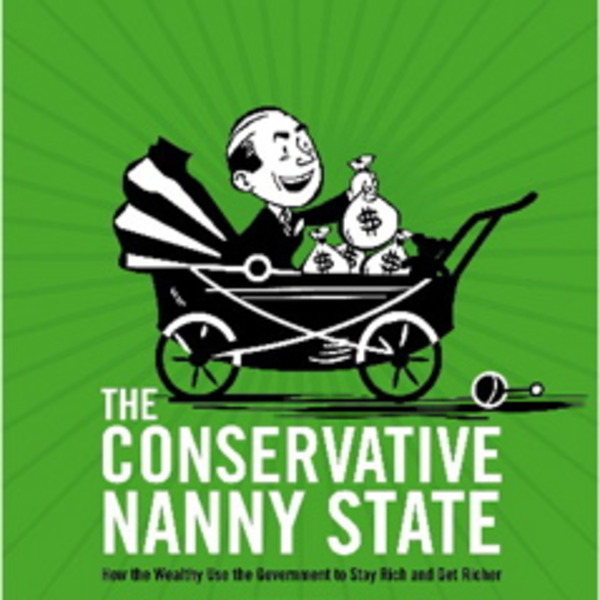
Aired 10/07/08 DEAN BAKER is one of the smartest progressive economics thinkers and we talk about the economic crisis, the bailout, the election, and what we might expect from an Obama or McCain administration. DEAN BAKER is the co-director of the Center for Economic and Policy Research (CEPR). http://www.cepr.net/index.php/dean-baker/ He is the author of THE CONSERVATIVE NANNY STATE: How the Wealthy Use the Government to Stay Rich and Get Richer (link). He also has a blog on the American Prospect http://www.prospect.org/csnc/blogs/ where he discusses the media's coverage of economic issues.


