Q&A: JACK CANFIELD, coauthor of the Chicken Soup for the Soul series
Written on August 24th, 2010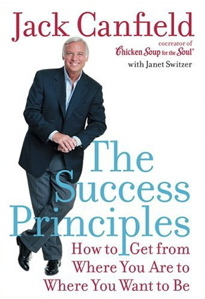 |
Aired 08/22/10 (Part 1 of 2) EVOLUTIONARY LEADERS CALL TO ACTION
JACK CANFIELD is one of America's leading experts in the development of human potential. Jack Canfield and Mark Victor Hansen are the #1 New York Times and USA Today bestselling coauthors of the Chicken Soup for the Soul series, with over 125 different titles in print, and worldwide sales of over 100 million copies. Jack is a Harvard graduate with a Master's Degree in psychological education and one of the earliest champions of peak-performance and self-esteem. The Success Principles (coauthored with Janet Switzer), offers the principles that he's studied, taught, and lived for the past 30 years in a practical and inspiring guide.
Q&A: ANDREW BACEVICH, professor of history & international relations – Author
Written on August 10th, 2010 |
Aired 08/08/10
ANDREW BACEVICH, professor of history and international relations at Boston University, served twenty-three years in the U.S. Army, retiring with the rank of colonel. He also lost his son in Iraq last year. A graduate of the U. S. Military Academy, he received his Ph. D. in American Diplomatic History from Princeton University. His writing has appeared in Foreign Affairs, the Atlantic Monthly, the Nation, the New York Times, the Los Angeles Times, and the Wall Street Journal. He is the author of several books, including THE NEW AMERICAN MILITARISM; THE LIMITS OF POWER: The End of American Exceptionalism; and his newest, WASHINGTON RULES: America's Path to Permanent War.
Q&A: TAD DALEY, International Physicians for the Prevention of Nuclear War & Author
Written on July 31st, 2010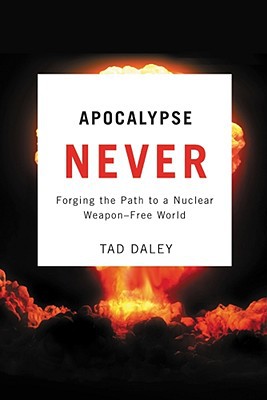 |
Aired 07/25/10
TAD DALEY, author, APOLCALYPSE NEVER: Forging the Path to a Nuclear Weapon Free World
TAD DALEY, J.D., Ph.D., is the Writing Fellow with International Physicians for the Prevention of Nuclear War, the 1985 Nobel Peace Laureate organization. He spent several years as a member of the International Policy Department at RAND, where many of the nuclear theories of the Cold War era originally were forged. He has served as a speechwriter and policy advisor to Congressman Dennis Kucinich, Congresswoman Diane Watson, and the late Senator Alan Cranston -- and once ran for U.S. Congress himself to represent mid-city Los Angeles. The LA WEEKLY said about his campaign: "Tad Daley boasts the most impressive credentials and much the most thoughtful platform of all the 16 candidates in the race .... (His ideas are) as sensible as they are unconventional."
Daley has written for the Los Angeles Times, USA TODAY, the Christian Science Monitor, Tikkun, and frequently in the at HuffingtonPost.com, TruthDig.com, AlterNet.org, TruthOut.org, and CommonDreams.org. His first book, APOLCALYPSE NEVER: Forging the Path to a Nuclear Weapon Free World, has recently been published.
Q&A: VALERIE PLAME, CIA agent
Written on July 22nd, 2010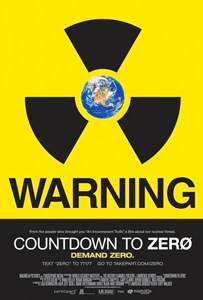 |
Aired 07/25/10
VALERIE PLAME, CIA agent outed by Bush White House Her focus: non-proliferation of nuclear weapons. She's featured in the film
COUNTDOWN TO ZERO, playing in NY and DC opening in LA July 30th.
How big a threat is North Korea? Will Iran go nuclear? Will Israel attack Iran? Are nukes safe in Pakistan? Are they safe in the former Soviet Union? Will Obama move seriously toward disarmament?
The globalization of the 21st century has produced positive and peaceful exchanges between peoples and nations, and it has given birth to global terrorism. Today a nuclear attack caused by accident, miscalculation or madness is a real possibility. The film COUNTDOWN TO ZERO (playing in NY and Washington and opening July 30th in LA) makes clear the nuclear threat and calls on us to commit to their abolition.
COUNTDOWN TO ZERO traces the history of the atomic bomb from its origins to the present, where nine nations possess nuclear weapons capabilities, and others race to join them. The world lives in a delicate balance that could be obliterated by an act of terrorism, failed diplomacy, or a simple accident.
The film, which includes Jimmy Carter, Mikhail Gorbachev, Pervez Musharraf and Tony Blair, was written and directed by Lucy Walker (Devil's Playground, Blindsight), produced by Lawrence Bender (Inglourious Basterds, An Inconvenient Truth) and developed, financed and executive produced by Participant Media, together with World Security Institute.
Q&A: RAGHURAM RAJAN, Author/Economist
Written on July 22nd, 2010 |
Aired 07/18/10
RAGHURAM RAJAN former chief economist at the IMF author, FAULT LINES: How Hidden Fractures Still Threaten the World Economy Rajan predicted trouble in 2005 and sees income inequality as a root cause.


