
Q&A: Rafe Esquith, Award Winning Teacher and Author
Written on September 29th, 2007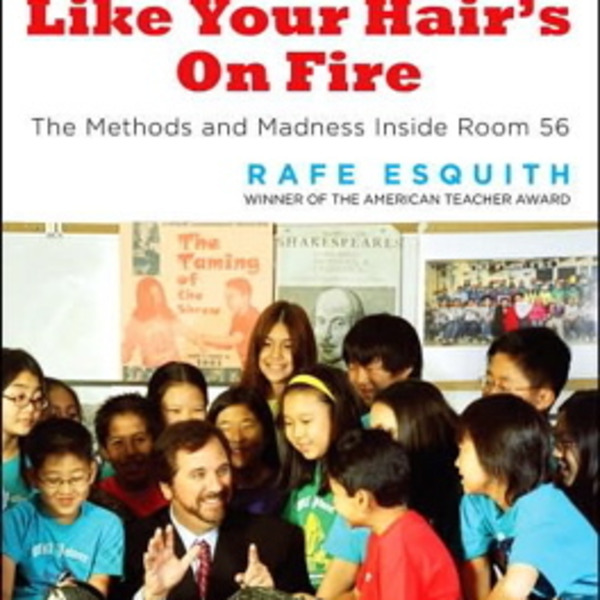
Rafe Esquith is an American teacher at Hobart Boulevard Elementary School, the second-largest elementary school in the United States, located in Los Angeles, California. A graduate of UCLA, Esquith began teaching in 1981. His teaching honors include the 1992 Disney National Outstanding Teacher of the Year Award, a Sigma Beta Delta Fellowship from Johns Hopkins University, Oprah Winfrey’s $100,000 Use Your Life Award, Parents Magazine’s As You Grow Award, National Medal of Arts, and Esquith was made an honorary Member of the Order of the British Empire by Queen Elizabeth. Esquith's fifth-grade students consistently score in the top 5% to 10% of the country in standardized tests. Many of Esquith's students start class at 7:00 each morning, two hours before the rest of the school's students. Most of his students come from immigrant Central American and Korean families and are learning English as a second language. They volunteer to come early, work through recess and stay as late as 5:30 pm, and also come to class during vacations and holidays. Each year the Hobart Shakespeareans, as Esquith’s students are known, perform one of the Shakespeare's plays. They have opened for the Royal Shakespeare Company, been hired by Sir Peter Hall to perform A Midsummer Night's Dream at the Ahmanson Theatre in Los Angeles and appeared at the Globe Theater in London.
Q&A: Drew Westen, Professor and Author
Written on September 29th, 2007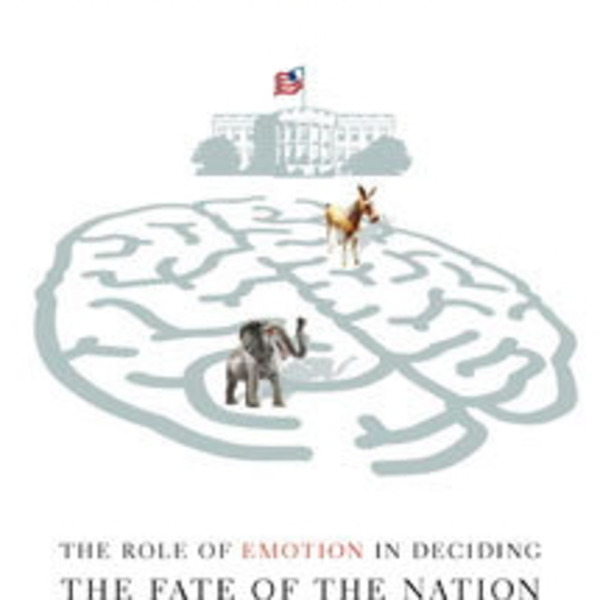
Drew Westen is Professor in the Departments of Psychology and Psychiatry at Emory University in Atlanta, Georgia. He received his undergraduate degree from Harvard University, an M.A. in Social and Political Thought from the University of Sussex (England), and a Ph.D. in Clinical Psychology from the University of Michigan, where he taught introductory psychology for several years. In January 2006 a group of scientists led by Drew Westen announced at the annual Society for Personality and Social Psychology conference in Palm Springs, California the results of a study in which functional magnetic resonance imaging showed that self-described Democrats and Republicans responded to negative remarks about their political candidate of choice in systematically biased ways. Specifically, when Republican test subjects were shown self-contradictory quotes by George W. Bush and when Democratic test subjects were shown self-contradictory quotes by John Kerry, both groups tended to explain away the apparent contradictions in a manner biased to favor their candidate of choice. Similarly, areas of the brain responsible for reasoning (presumably the prefrontal cortex) did not respond during these conclusions while areas of the brain controlling emotions (presumably the amygdala and/or cingulate gyrus) showed increased activity as compared to the subject's responses to politically neutral statements associated with politically neutral people (such as Tom Hanks) Subjects were then presented with information that exonerated their candidate of choice. When this occurred, areas of the brain involved in reward processing (presumably the orbitofrontal cortex and/or striatum/nucleus accumbens) showed increased activity. As Dr. Westen said, "None of the circuits involved in conscious reasoning were particularly engaged... Essentially, it appears as if partisans twirl the cognitive kaleidoscope until they get the conclusions they want... Everyone... may reason to emotionally biased judgments when they have a vested interest in how to interpret 'the facts.'"
Q&A: Robert H. Frank, Professor, Columnist, and Author
Written on September 29th, 2007
Professor Robert H. Frank is the Henrietta Johnson Louis Professor of Management Professor of Economics at Cornell University's S.C. Johnson Graduate School of Management. He is a monthly contributor to the "Economic Scene" column in The New York Times. Until 2001, he was the Goldwin Smith Professor of Economics, Ethics, and Public Policy in Cornell's College of Arts and Sciences at Cornell University. He has also served as a Peace Corps volunteer in rural Nepal, chief economist for the Civil Aeronautics Board, fellow at the Center for Advanced Study in the Behavioral Sciences, and was Professor of American Civilization at École des hautes études en sciences sociales in Paris. Professor Frank's books include Choosing the Right Pond, Passions within Reason, Microeconomics and Behavior, Luxury Fever, and What Price the Moral High Ground? The Winner-Take-All Society, co-authored with Philip Cook, was named a Notable Book of the Year by The New York Times, and was included in Business Week's list of the ten best books for 1995. Professor Frank holds a BS in mathematics from the Georgia Institute of Technology. He also holds an MA in statistics and a PhD in economics, both from UC Berkeley.
Q&A: Stephen Duncombe, Author, Activist and Professor
Written on September 29th, 2007
Stephen Duncombe is a long-time activist and a professor of at the Gallatin School at New York University. His new book Dream: Re-imagining Progressive Politics in an Age of Fantasy urges progressives to tap into popular fantasies and desires and to develop a politics that imagines and embodies a better world rather than simply "speaking truth." To clarify his point, he enlists a wildly eclectic group -- everything from Grand Theft Auto: San Andreas and Las Vegas to Cindy Sheehan and the Billionaires for Bush.
Q&A: Deborah Tannen, Author and Professor of Linguistics
Written on September 27th, 2007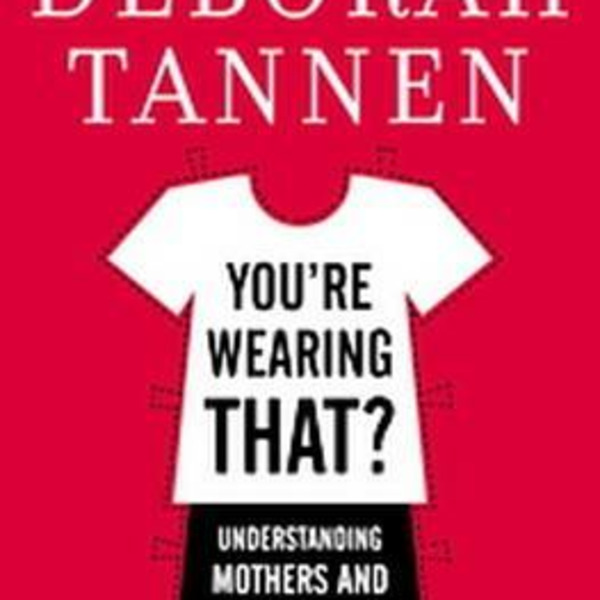
Deborah Frances Tannen is an American professor of linguistics at Georgetown University. Although she has lectured worldwide in her field, and written or edited numerous academic publications on linguistics and interpersonal communication, she is best known for her general-audience books on interpersonal communication and public discourse. She became well-known in the United States after her book You Just Don't Understand - Women and Men in Conversation was published in 1990. It was on the New York Times best seller list for nearly four years, was for eight months the number one best seller, and was subsequently translated into 29 other languages and on best-seller lists in six other nations. She has since made numerous appearances on major television and radio shows as an expert on interpersonal communication, and has had material published in many major newspapers and magazines. You're Wearing That? Understanding Mothers and Daughters in Conversation, her latest book, was also on the best seller list. She is the author of several popular books about the way people in social situations talk to each other. By studying these interactions, she attempts to help others to understand them and so get along better in relationships.


